Fire Protection Solutions for Piping
In this article, we are talking about the piping fire protection.
The contents are as follows:
The Role of Thermal Insulation and Fire Protection in Industrial Piping Systems
Industrial piping systems are widely used in power generation, manufacturing, chemical processing, and other energy-related industries.
Systems such as:
- High-pressure steam piping
- Turbine exhaust systems
- Exhaust flues
- Emergency generator exhaust pipes
operate under elevated temperatures and may require thermal insulation and fire protection measures depending on the application requirements.
Fire protection during emergency conditions
Fire protection measures help:
- Reduce heat transfer during fire exposure
- Protect surrounding equipment
- Limit the impact of high-temperature environments
- Maintain required safety performance
The selection of insulation materials depends on several factors, including:
- Operating temperature
- Thermal conductivity requirements
- Fire resistance requirements
- Installation conditions
- Maintenance requirements
Flexible high-temperature insulation materials, such as ceramic fiber blanket and felt, are commonly used in applications where resistance to elevated temperatures, low thermal conductivity, and adaptability to complex geometries are required.
Common Challenges in Industrial Piping Thermal and Fire Protection
Industrial piping systems require careful consideration of operating conditions, installation environment, and long-term reliability. Selecting the right insulation and fire protection materials involves balancing performance, durability, and cost.
________________________________________
1. Selecting the Right Material for Different Operating Conditions
Different piping systems operate under different temperatures and environments.
Material selection should consider:
• Operating temperature
• Installation space
• Fire protection requirements
• Cost-effectiveness
The right material should provide suitable performance while meeting project requirements.
________________________________________
2. Long-Term Durability and Maintenance Requirements
Piping insulation systems are often installed in critical facilities where repair or replacement can be costly.
Materials should provide:
• Long-term temperature stability
• Resistance to thermal cycling
• Reliable performance during service life
________________________________________
3. Installation Challenges for Complex Pipe Configurations
Industrial piping systems often include:
• Elbows
• Valves
• Flanges
• Expansion joints
Insulation materials need to adapt to complex geometries and ensure continuous protection without gaps.
________________________________________
4. Performance Under Thermal Cycling
Many piping systems experience repeated heating and cooling cycles during operation.
Insulation materials should maintain their properties under thermal stress and temperature fluctuations.
________________________________________
5. Meeting Fire Protection Requirements
Certain applications require additional fire protection performance, especially in:
• Power plants
• Data centers
• Oil & gas facilities
• Industrial plants
The selected system should meet required fire ratings and applicable standards.
________________________________________
6. Balancing Performance, Weight, and Installation Space
In many projects, available space and system weight are important considerations.
Engineers need to balance:
• Thermal performance
• Insulation thickness
• Installation requirements
Industry Applications of Ceramic Fiber Pipe Wrap Systems
Typical applications in power and electric include power generation facilities, data centers, battery energy storage systems (BESS), and other industrial environments.
Power Generation Fire protection
Power generation facilities contain various high-temperature piping systems that require thermal insulation and, in certain areas, fire protection considerations.
Typical applications include:
High-pressure steam pipes
Superheated steam pipes
Boiler piping
Turbine exhaust pipes
Flue gas ducts
Operating Conditions
Typical temperature ranges:
Steam piping: approximately 300–600°C
Exhaust gas systems: approximately 400–700°C
Key Requirements
Insulation systems for power plants are designed to address:
• Thermal insulation
• Heat loss reduction
• Fire protection considerations
Ceramic fiber materials are commonly used for high-temperature piping applications because they provide:
Stable performance at elevated temperatures
Low thermal conductivity
Lightweight and flexible installation
They are suitable for applications where piping systems have complex geometries or where traditional rigid insulation materials are difficult to install.
Data Center Fire Protection
Although data centers do not typically contain large process piping systems, thermal insulation and fire protection are important for critical infrastructure such as emergency power systems.
Typical applications include:
Emergency generator exhaust systems
Mechanical rooms
Backup power infrastructure
Emergency Generator Exhaust Pipe Protection
Diesel generators are widely used as backup power sources for data centers.
During operation, exhaust pipes can reach high temperatures, typically around:
300–600°C
Without proper insulation, high-temperature exhaust systems may create risks including:
Heat damage to nearby electrical cables
Increased temperature in equipment rooms
Potential ignition risks when combustible materials are nearby
Key Requirements
Generator exhaust insulation systems should consider:
Exhaust heat control
Protection of surrounding equipment
Fire safety requirements
Limited installation space
Recommended Materials:
1)Ceramic Fiber Blanket
Suitable for:
Generator exhaust pipe insulation
High-temperature protection
Flexible wrapping applications
Advantages:
High temperature resistance
Lightweight structure
Easy installation around complex exhaust configurations
2)Ceramic Aerogel
Used where installation space is limited.
Typical advantages:
Lower insulation thickness
Excellent thermal insulation performance below approximately 500°C
Suitable for compact equipment areas
Battery Energy Storage System BESS Fire Protection
With the rapid development of renewable energy, Battery Energy Storage Systems (BESS) are being deployed in more locations, including industrial facilities, renewable energy projects, and grid infrastructure.
A key safety concern in BESS is thermal runaway, which can generate high temperatures and may result in fire propagation if not properly controlled.
(Note: Internal BESS thermal insulation and fire protection design are discussed in a separate article. This section focuses on external applications where insulation and fire protection materials are required.)
An typical BESS fire protection system may including:
• Container exhaust
• Fire barrier pipe
External BESS protection systems may require:
Thermal insulation
Fire runaway control
________________________________________
Recommend materials:
① Ceramic Fiber Blanket
Which can be used for:
• Fire barrier wrap
• Thermal insulation
Suitable for areas where fire resistance is required
________________________________________
② Ceramic aerogel
It is commonly considered for applications where space limitations are critical.
________________________________________
③ Microporous Material
Microporous insulation materials are used where extremely high insulation performance is required within a very limited space.
Common Insulation and Fire Protection Approaches for Industrial Piping
Ceramic Fiber Blanket for High Temperature Pipe Insulation
Ceramic fiber blanket is a flexible high-temperature insulation material used in industrial applications.
Typical characteristics include:
• Low thermal conductivity
• Resistance to high temperatures
• Lightweight structure
• Flexible installation
It can be applied to:
• Steam piping
• Exhaust systems
• Furnace components
• High-temperature equipment
Because of its flexibility, ceramic fiber blanket can adapt to:
• Curved pipe surfaces
• Irregular geometries
• Complex equipment structures
Ceramic Fiber Felt / Ceramic Aerogel for Thin Insulation Applications
Ceramic fiber felt is used where a thinner and more compact insulation layer is required.
Typical applications include:
• Limited installation spaces
• Small diameter pipes
• Exhaust components
• Equipment with complex shapes
Compared with rigid insulation materials, flexible felt materials allow easier fabrication and installation around irregular surfaces.
Microporous material
Microporous insulation materials offer lower thermal conductivity compared with ceramic fiber felt and ceramic aerogel, making them suitable for applications requiring maximum thermal insulation performance with limited installation space.
Unlike flexible ceramic fiber products, microporous materials have a rigid and fragile structure and cannot be directly rolled or wrapped around pipes.
They are usually supplied as rigid boards or molded components. For pipe insulation applications, customized shapes can be manufactured through mold pressing according to the pipe geometry.
Although the initial tooling cost can be higher due to mold development requirements, this approach can be considered for projects with repeated designs or large production quantities.
Comparison of Common Pipe Insulation Materials
Different insulation materials have different application ranges.
Material selection should consider:
• Operating temperature
• Required insulation thickness
• Mechanical conditions
• Installation requirements
Ceramic Fiber vs Mineral Wool
Performance | Ceramic Fiber | Mineral Wool |
Temperature Resistance | Very High | Medium to High |
Weight | Lightweight | Heavier |
Flexibility | Flexible | Limited |
Thermal Shock Resistance | Excellent | Moderate |
Typical Application | High-temperature equipment and piping | General industrial and building insulation |
Ceramic fiber is generally selected for applications requiring:
• Higher temperature resistance
• Lightweight construction
• Flexible installation
Mineral wool is widely used for:
• Building insulation
• General industrial insulation
• Moderate temperature applications
Ceramic Fiber vs Calcium Silicate Board
Performance | Ceramic Fiber | Calcium Silicate Board |
Structure | Flexible | Rigid |
Installation | Wrapping and shaping possible | Requires cutting and fixing |
Weight | Lower | Higher |
Thermal Shock Resistance | Excellent | Moderate |
Typical Application | Pipes and complex geometries | Fixed insulation systems |
Ceramic fiber is often considered where:
- Pipe surfaces are irregular
- Space is limited
- Mechanical flexibility is required
Ceramic Fiber vs Perlite Insulation
Performance | Ceramic Fiber | Perlite |
Flexibility | High | Low |
Weight | Lightweight | Higher |
Thermal Cycling Resistance | Excellent | Moderate |
Installation | Easy adaptation | More rigid installation |
Ceramic Aerogel vs Traditional Aerogel (Silica Aerogel)
Performance | Ceramic aerogel | Silica aerogel |
Temperature Resistance | Higher temperature stability | Generally lower continuous temperature resistance |
Thermal Conductivity | Very Low | Very Low |
Flexibility | Flexible blanket available (1000R series) | Flexible blanket form available |
Typical Application | High-temperature equipment | Building insulation, low-to-medium temperature applications |
Engineering Design Considerations for Industrial Pipe Protection
When selecting thermal insulation and fire protection systems, engineers should evaluate:
Operating Temperature
Consider:
- Normal operating temperature
- Maximum operating temperature
- Fire exposure temperature
Required Fire Resistance
Depending on application requirements:
- 1 hour
- 2 hours
- 3 hours
- 4 hours
Pipe Configuration
Consider:
- Pipe diameter
- Elbows
- Valves
- Flanges
- Expansion joints
Environmental Conditions
Evaluate:
- Indoor or outdoor installation
- Humidity
- Chemical exposure
- Mechanical impact
Best Practices for Industrial Piping Thermal and Fire Protection
Recommended practices include:
- Select insulation materials according to operating conditions
- Ensure continuous insulation coverage
- Minimize thermal bridges
- Protect joints and connections
- Consider maintenance access
- Evaluate fire protection requirements for critical applications
- Inspect insulation systems periodically
Relevant Standards
Depending on project requirements, applicable standards may include:
- ASTM C547 — Mineral Fiber Pipe Insulation
- ASTM C892 — High Temperature Insulation Materials
- ASTM E119 — Fire Resistance Tests
- UL 1709 — Rapid Rise Fire Tests
- EN 1363 — Fire Resistance Tests
- ISO 834 — Fire Resistance Tests
Case Study 1 – High temperature steam pipe wrapping in oil and gas
For a high-temperature styrene insulated pipeline with a diameter of 25 mm and an internal temperature of over 900°C, the customer requires minimizing heat loss to the greatest extent possible, necessitating insulation materials with extremely low thermal conductivity. Taking into account the tight installation space on site, our company recommended MICROPOROUS material and ceramic fiber blanket. We custom-made molds based on the customer’s drawings to produce specially shaped parts. After installation, the solution occupies minimal space and presents a neat, well-fitted appearance. The outer layer is then wrapped with acid- and alkali-resistant metal foil.
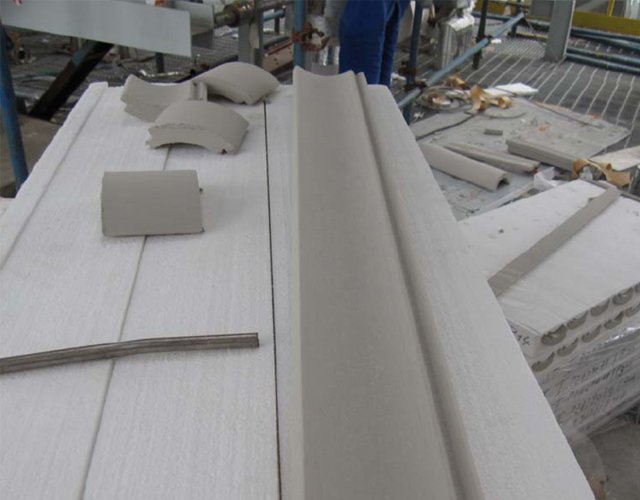
Microporous materials shaped by custom made molds
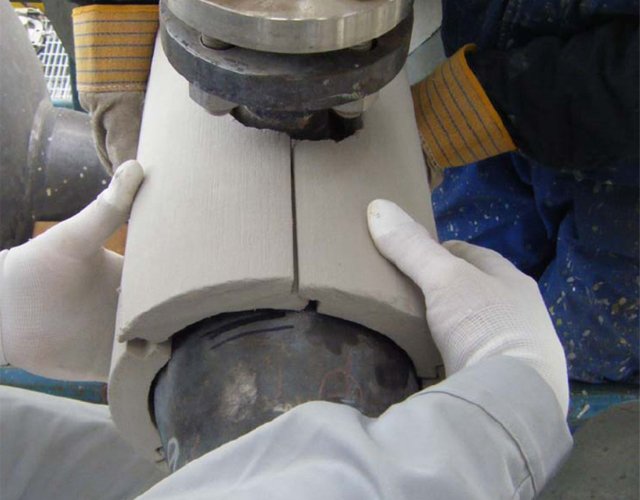
Wrapping the pipeline
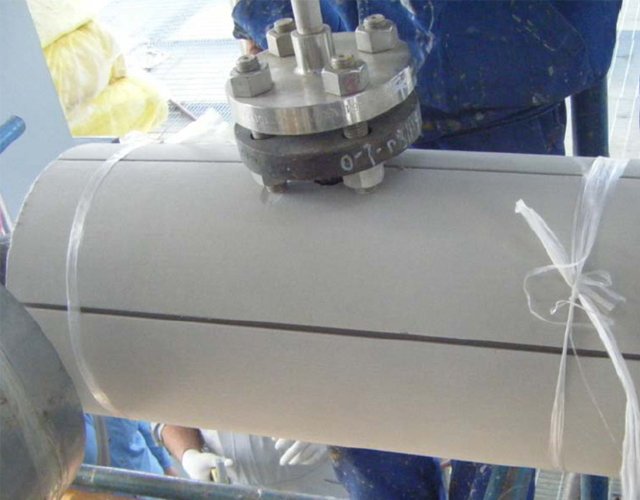
Wrapping the pipeline
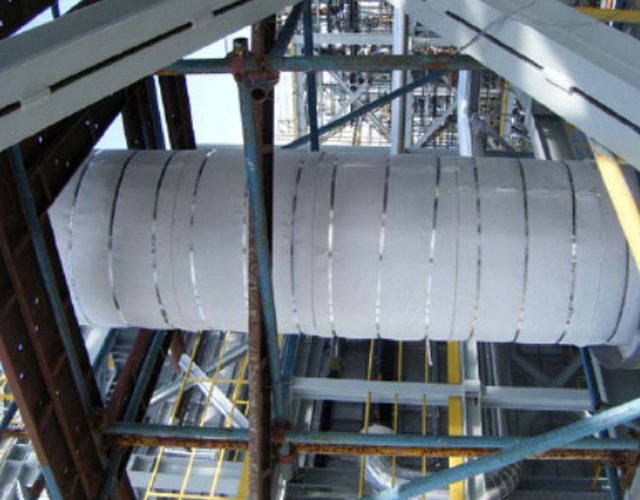
Wrapping the pipeline