Fire Protection Solutions for Fire Rated Roller Shutters and Fire Curtains
Content
Enhancing Fire Resistance and Thermal Protection of Fire Rated Roller Shutters with Ceramic Fiber Materials
Fire rated roller shutters and fire curtains are essential passive fire protection systems designed to prevent the spread of fire, smoke, and heat between different areas of a building.
They are widely used in:
• Commercial buildings
• Shopping malls
• Industrial facilities
• Warehouses
• Airports
• Data centers
• Power plants
• Energy storage facilities
Unlike traditional doors, fire rated roller shutters can cover large openings while maintaining fire compartmentation.
During a fire event, these systems must provide:
• Flame resistance
• Thermal insulation
• Smoke control
• Structural stability
• Reliable operation under high temperature conditions
The performance of a fire rated roller shutter depends not only on the mechanical structure but also on the quality of the internal insulation materials.
High-performance insulation materials such as ceramic fiber blankets and felts play an important role in reducing heat transfer and maintaining fire resistance.
Understanding Fire Risks in Large Openings and Fire Compartmentation
Buildings are divided into multiple fire compartments to limit fire spread.
However, large openings required for:
• Logistics access
• Industrial production lines
• Parking areas
• Commercial spaces
can become weak points during a fire.
Without proper protection, fire may spread through these openings, resulting in:
• Rapid temperature increase
• Flame propagation
• Smoke migration
• Damage to adjacent areas
Fire rated roller shutters and curtains are designed to close these openings automatically during fire emergencies and restore the integrity of fire compartments.
Why Fire Rated Roller Shutters Require High Performance Insulation Materials
A fire shutter is exposed to extreme temperatures during a fire.
The external surface temperature may increase rapidly, creating risks including:
• Heat radiation to nearby areas
• Damage to surrounding equipment
• Loss of fire compartment protection
Therefore, the insulation layer inside the shutter system must provide:
• Low thermal conductivity
• High temperature resistance
• Lightweight construction
• Long-term stability
Ceramic fiber materials are widely used because they can maintain insulation performance under extremely high temperatures while reducing overall system weight.
Common Challenges in Fire Rated Roller Shutter Manufacturing
1: Maintaining Fire Resistance While Reducing Weight
Traditional fire protection systems often rely on heavy materials.
Examples include:
• Steel plates
• Concrete-based materials
• Perlite boards
• Magnesium oxide boards
Although these materials provide fire resistance, they may significantly increase:
• Curtain weight
• Motor load
• Structural requirements
• Installation difficulty
For large-area roller shutters, weight reduction becomes an important engineering consideration.
2: Achieving High Thermal Insulation Performance
During fire exposure, the main challenge is not only preventing flame penetration but also controlling heat transfer.
A good insulation core should:
• Delay temperature rise
• Reduce heat radiation
• Protect surrounding structures
• Maintain safe surface temperatures
3: Maintaining Flexibility and Mechanical Reliability
Unlike fixed fire barriers, roller shutters require repeated movement.
The insulation material must withstand:
• Rolling operation
• Vibration
• Installation stress
• Long-term use
Rigid materials may crack or deteriorate when exposed to repeated mechanical movement.
Passive Fire Protection Solutions for Fire Rated Roller Shutters
Solution 1: Ceramic Fiber Blanket and Felt for Fire Rated Roller Shutter Insulation
Ceramic fiber blanket and felt are advanced high-temperature insulation materials designed for applications requiring excellent thermal protection with lightweight construction.
Working Principle
During fire exposure:
1. Ceramic fiber materials provide thermal insulation.
2. Heat transfer through the shutter structure is reduced.
3. Temperature rise on the protected side is delayed.
4. Fire compartment performance is maintained.
Key Advantages of Ceramic Fiber Materials
Excellent High Temperature Resistance
Ceramic fiber products can withstand extremely high operating temperatures, making them suitable for fire protection applications.
________________________________________
Lightweight Construction
Compared with traditional rigid insulation materials, ceramic fiber materials provide:
• Lower weight
• Easier installation
• Reduced load on shutter mechanisms
________________________________________
Flexible and Easy Processing
Ceramic fiber blanket and felt can be:
• Cut
• Folded
• Wrapped
• Laminated
This makes them suitable for customized roller shutter designs.
________________________________________
Low Thermal Conductivity
The low thermal conductivity helps reduce heat transfer and improve fire insulation performance.
Solution 2: Composite Fire Curtain Systems Using Ceramic Fiber Materials
For large openings where traditional fire doors are impractical, fire curtains provide an effective solution.
Applications include:
• Shopping centers
• Airports
• Industrial buildings
• Data centers
Typical construction:
• Fire resistant fabric
• Ceramic fiber insulation layer
• Protective coating
• Mechanical support system
Benefits:
• Space saving
• Lightweight
• Large opening protection
• High fire resistance performance
Solution 3: Fire Resistant Layer Enhancement for Existing Roller Shutters
For existing buildings, upgrading fire performance may be required.
Ceramic fiber insulation layers can be integrated into:
• Existing roller shutters
• Fire barriers
• Equipment enclosures
Benefits:
• Improved thermal performance
• Reduced heat transfer
• Extended service life
Comparison Between Ceramic Fiber Materials and Traditional Fire Insulation Materials
Different insulation materials have different characteristics.
The selection depends on:
• Fire rating requirements
• Weight limitations
• Installation conditions
• Mechanical requirements
Ceramic Fiber Blanket / Felt vs Perlite Board
Performance | Ceramic Fiber Blanket/Felt | Perlite Board |
Material Type | Flexible fiber insulation | Rigid board |
Weight | Lightweight | Heavier |
Flexibility | Excellent | Limited |
Mechanical Processing | Easy cutting and wrapping | Requires cutting tools |
Thermal Shock Resistance | Excellent | Moderate |
Application | Roller shutters, fire curtains, high-temperature insulation | Walls, doors, rigid barriers |
Advantages of Ceramic Fiber:
• Better flexibility
• Lower weight
• Easier installation
• Suitable for moving systems
Ceramic Fiber Blanket/Felt vs Magnesium Oxide (MgO) Board
Performance | Ceramic Fiber | MgO Board |
Structure | Flexible insulation | Rigid panel |
Weight | Lightweight | Heavier |
Thermal Insulation | Excellent | Good |
Fire Resistance | Excellent | Excellent |
Impact Resistance | Moderate | Higher |
Application | Fire curtains, roller shutters | Fire walls, partitions |
Advantages of Ceramic Fiber:
- Better thermal insulation efficiency
- Lower system weight
- Suitable for applications requiring movement
Why Ceramic Fiber Is Preferred for Fire Roller Shutters
Fire rated roller shutters have unique requirements compared with fixed fire walls.
They require:
✓ High temperature resistance
✓ Lightweight design
✓ Flexibility
✓ Resistance to thermal shock
✓ Easy fabrication
Traditional rigid materials may perform well in stationary applications but are less suitable for moving fire protection systems.
Engineering Design Considerations for Fire Rated Roller Shutters
When selecting insulation materials, engineers should evaluate:
________________________________________
Fire Rating Requirements
Typical fire resistance ratings include:
• 60 minutes
• 90 minutes
• 120 minutes
• 180 minutes
For fire insulation ≥ 0.50 hours and fire integrity ≥ 0.50 hours: It is recommended to use AY Frax BD-M1000 model 10mm ceramic fiber blanket/ felt.
For fire insulation ≥ 1.00 hour and fire integrity ≥ 1.00 hour: It is recommended to use AY Frax BD-M1000 model 20mm ceramic fiber blanket/ felt.
For fire insulation ≥ 1.50 hours and fire integrity ≥ 1.50 hours: It is recommended to use AY Frax BD-M1000 model 30mm ceramic fiber blanket/ felt.
________________________________________
Operating Temperature
Material selection should consider:
• Fire temperature exposure
• Duration of exposure
• Heat transfer requirements
________________________________________
Weight and Mechanical Load
The insulation system should balance:
• Fire performance
• Curtain weight
• Motor capacity
• Structural support
________________________________________
Environmental Conditions
Consider:
• Humidity
• Chemical exposure
• Outdoor installation
• Maintenance requirements
Best Practices for Fire Rated Roller Shutter and Fire Curtain
Recommended practices:
✓ Select insulation materials according to fire rating requirements
✓ Optimize insulation thickness
✓ Reduce unnecessary structural weight
✓ Ensure proper installation of insulation layers
✓ Conduct fire performance testing
✓ Consider long-term mechanical operation
Relevant Standards
Fire rated roller shutters and curtains may be evaluated according to:
• EN 1634-1 Fire resistance tests for doors and shutters
• EN 13501 Fire classification of construction products
• UL 10D Fire tests of fire protective curtains
• ASTM E119 Fire tests of building construction materials
Case Study: Industrial Fire Rated Roller Shutter Upgrade Challenge
Traditional rigid insulation increased shutter weight and affected operation reliability.
Solution
Ceramic fiber blanket insulation was integrated into the roller shutter system.
Result
• Reduced system weight
• Improved thermal insulation
• Enhanced fire protection performance
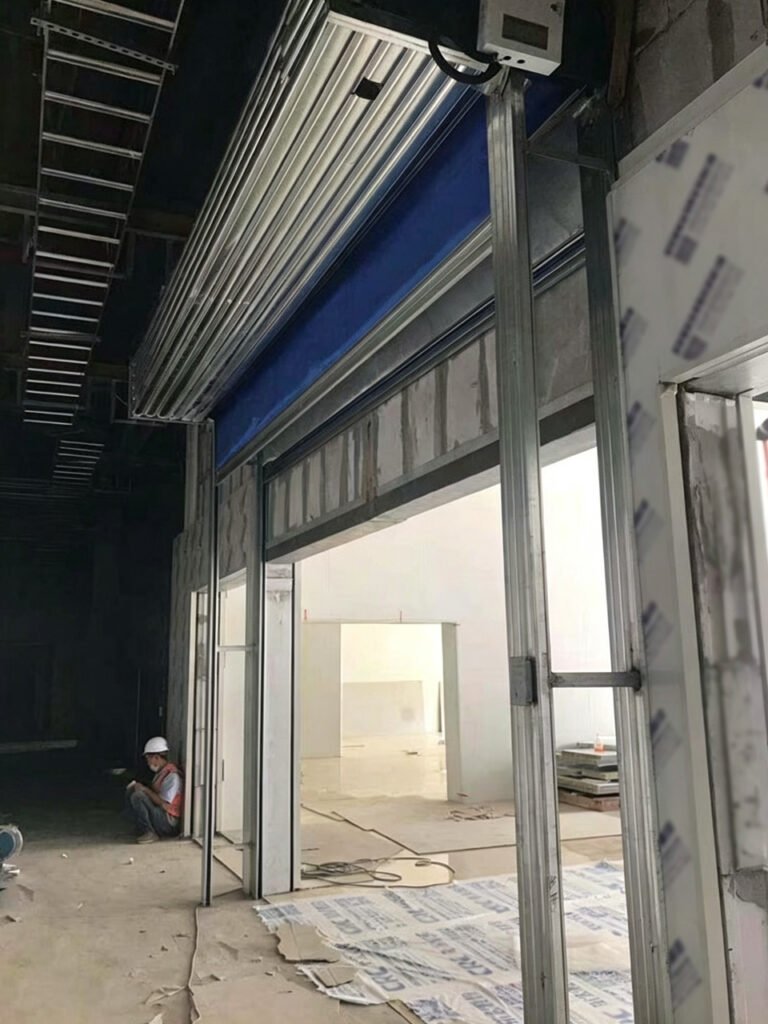
Fire Rated Roller Shutter
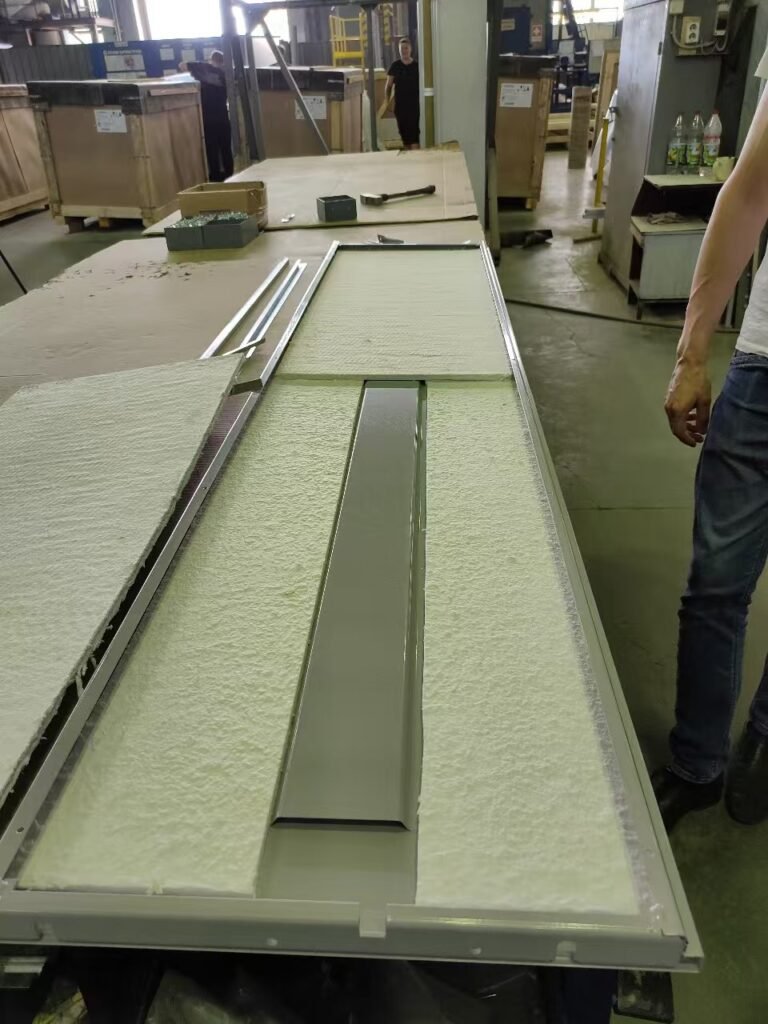
Firedoor